Three Generations of ADHD: How Relational Patterns and Generational Trauma Travel Through Families and Cultures
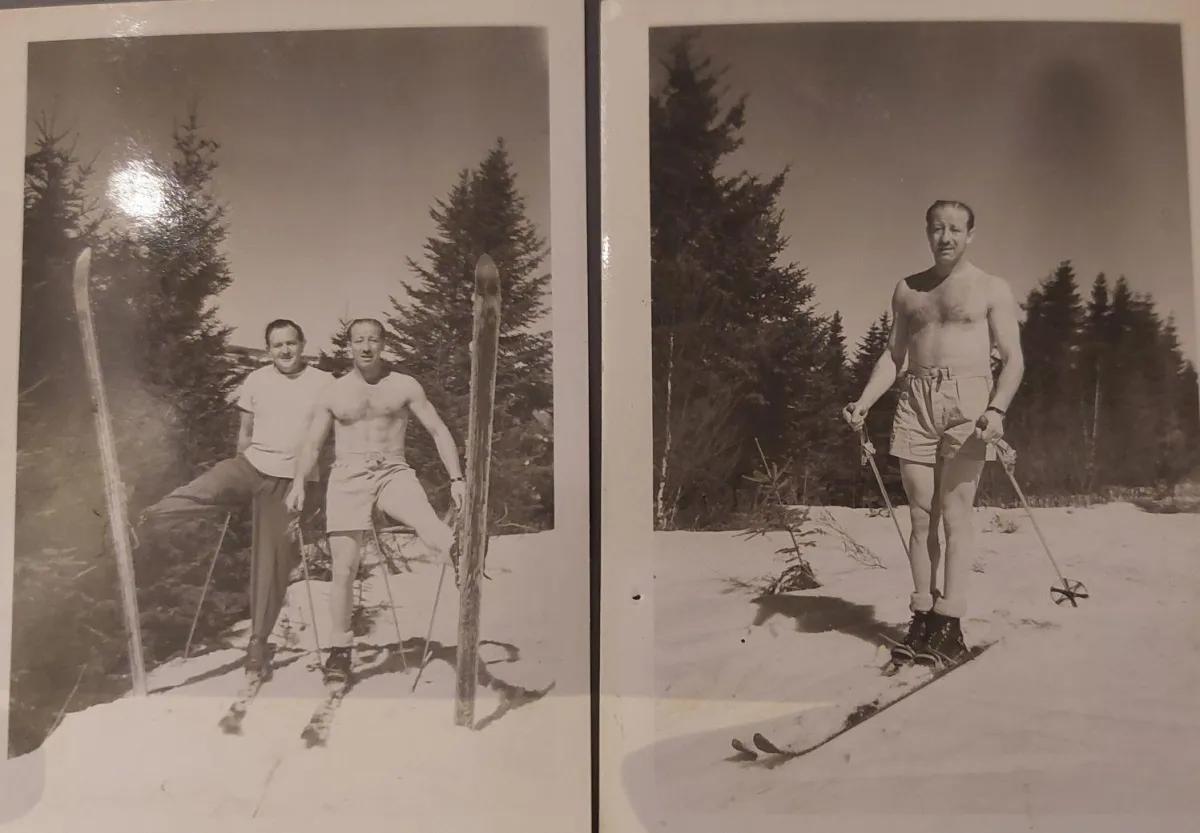
I can trace my ADHD back three generations. Not through genetic testing or family medical records, but through the living stories passed on from one generation to the next. Images of my grandfather skiing shirtless meet stories of business bankruptcy, painting a picture that feels eerily familiar. Like many who live with ADHD, there are common threads in how these stories are told. A sense of potential flavoured with disappointment, frustration, and sometimes disgust. A visceral sense of how these traits impact the family system connected to them.
These stories are the most prominent living memories I have of him. His memory is clouded in a sea of disappointment and frustration. I hope that my work to help understand and transform ADHD experiences in my life and those I support can serve to redeem and transform his memory. I believe this is part of the task we all carry — to somehow penetrate the core of our experience such that the patterns we carry with us can be transformed.
The tragedy of ADHD, like addiction and other conditions, is that it gets worse under stress. It is much easier to manage when times are good, but mounting pressure spins quickly out of control. Under stress, well-managed tendencies erode into a cascade of poor decision-making, leading to serious impacts on the individual and the people they love most — a snowball effect which undermines the potential of an otherwise hopeful future.
When ADHD goes unrecognised, its characteristics are written off as frustrating, self-absorbed character defects. Seen as personal pathology beyond intervention, these characteristics haunt families as stories of poor judgement, self-absorption, and dysfunction.
Thankfully, a wider, more compassionate lens is becoming available for those who take the research into ADHD seriously. Rather than personality traits, ADHD can be viewed as a biological tendency, which is difficult to manage without the right guidance and support. Unsupported, it creates environmental stressors that pass from one generation to the next, a trickle-down effect where environment and biology trigger and re-trigger each other, creating cycle after cycle of unrealised potential.
The stress response of my grandparents’ nervous system moved through my parents’ into mine. Each generation had ADHD characteristics that were exacerbated by environmental stress. These in turn directly influenced relational trust and financial stability within the family home, creating an generational cascade of challenges ripe for poor executive function to continue in subsequent generations. Understanding ADHD and family patterns like these reveals how deeply interconnected our nervous systems truly are across time.
How Patterns Travel Through Generations
I have spoken previously about my own story of late ADHD diagnosis. In that piece, I acknowledged that my ADHD symptoms shifted from functional to dysfunctional during the events surrounding my parents’ separation. I had challenges before that, but worked through them and was relatively on track until that point. It was not a given that my ADHD characteristics would significantly derail my life path.
The circumstances of my parents’ separation interrupted a sensitive unfolding in my system, cutting short the consolidation of executive function. There were certainly other contributing factors. Over-consumption of cannabis through the high school years played a part in inhibiting certain developmental processes, but I came out the other side of that bursting with enthusiasm and purpose. I can clearly distinguish a before and after from the time of my parents’ separation, where my capacity for self-directed activity took a subtle turn towards disordered thinking which I now look back and recognise clearly as the onset of ADHD.
My parents’ separation did not occur in a vacuum. The challenges they faced in relationship were based on relational patterns they inherited. They learned to relate in their families of origin, and experienced events which shaped how their own executive functions matured and developed. These were shaped by the capacities of their parents, whose early experiences shaped them and so on.
I hope that these examples provide a clear illustration of how biological tendency meets social circumstance and impacts future biological expression. Stress impacts developmental process, and developmental process is how we learn to navigate our world.
Before continuing to deepen our understanding of how these patterns play out across generations, it’s worth clarifying what we’re actually talking about when we say “ADHD.”
What is ADHD
ADHD is synonymous with underdeveloped or underutilised executive function. Executive function is how we take rational, focused, sequential action towards our goals. When it is compromised, we see challenges with motivation, staying on task, planning and time management, impulse control, and attending responsively to our environment.
Think of executive function as the conductor of an orchestra. When it’s working well, all the different sections — motivation, focus, time management, impulse control — play in harmony. But when the conductor struggles, even talented musicians (your other capabilities) can’t create coherent music together.
Most mental health conditions involve some impairment of executive functioning, which makes distinguishing between these different experiences somewhat challenging. What is unique about ADHD is that it is primarily a difficulty with executive function.
Depression typically includes challenges with executive function, but it is primarily characterised by a lack of meaning. ADHD and depression often co-exist, but that is a story for another time. Likewise, psychosis also includes extreme disruption of executive function, but includes a breakdown of consensus reality that is not present in ADHD.
Rather than defining a person’s experience, diagnosis is simply a tool we sometimes use to help categorise a problem in order to know what might help.
The conventional response to understanding ADHD as an inheritable trait is simple: genetics. But the attachment lens reveals something more complex, and potentially more hopeful —relational patterns are also transmitted across generations.
“ADHD runs in families not only through genes, but also through relational patterns transmitted across generations.”
Hypervigilant parenting tends to create more anxious children. Emotionally overwhelmed parents tend to be less present than needed for sensitive children to optimally consolidate executive functions. Patterns repeat, not because we want them to, but because we build our baseline from the social relationships around us. Sometimes we rebel, but more likely we mirror. This is our developmental starting point.
Our modern cultural context of isolated materialism tends to think of inheritance only in terms of material possessions. But what if we consider also the social, emotional, relational, and spiritual properties that are passed down? These are inherited too, passed down in the form of values, norms, stories, and belief systems, but much less likely to be acknowledged.
In the absence of understanding this rich cultural inheritance, we look at individuals as isolated units of experience. We see someone struggling, diagnose ADHD or some other condition, prescribe medication or a course of therapy, and leave it at that. In some cases, we acknowledge the family history, and in even fewer cases we consider the formative nature of these experiences.
We rarely stop to acknowledge the epigenetic interaction between tendency and circumstance, how a grandmother’s experience of war, a grandfather’s displacement, a mother’s unmetabolised grief, and a father’s developmental wounds determine the forming of an individual life story.
The Epigenetic Dance: Biology Meets Environment
Modern psychology is beginning to change this. The ACEs research (Adverse Childhood Experiences)shows clear correlations between early stress and ADHD symptoms.Attachment research demonstrates that secure early relationships are foundational for executive function development. Epigenetics research reveals that traumatic stress can alter gene expression in ways that persist across generations.
I am not asserting that ADHD expression is exclusively relational. Multiple factors shape the unfolding of each individual’s story and there are certainly individuals who report healthy, supported childhoods that still fall on the ADHD spectrum. Instead I would say that ADHD is contextual — its expression is shaped by a multitude of environmental factors and stressors. Supportive relational bonds are simply a primary building block in the promotion of healthy executive function.
The fact that ADHD characteristics are inheritable can be understood as an interaction between genetic tendencies and environmental conditions. In this lifetime, we don’t have control of the genetic tendencies we inherit. We are dealt a hand at birth which includes certain limits to the infinite scope of potential. A dandelion can’t become an orchid and an orchid can’t become a dandelion. But a dandelion, just like an orchid, can grow in many different ways depending on the situation.
The resources my grandfather had available to assess and respond to his difficulties are different than what my own father had access to, which are different again than what I now have available today. Likewise with the stressors we were each exposed to. We may all carry the same genetic tendency, but its expression has changed because of our life circumstances. My son faces new and different challenges looking forwards, which I can only begin to grasp, but also new resources, resources of understanding and relational sensitivity that haven’t been readily available in our recent family history.
Psychiatrist John Kruse notes that there are observable biological realities in people with ADHD. There are differences in dopamine neurotransmission, regional connectivity, cortical thickness, and patterns of maturation in the brains of those with ADHD compared to those without it. Recognising measurable brain differences can be a source of encouragement for people who previously felt some personal shame about chronic tardiness, for example. Equally encouraging is the recognition that these measurable physical attributes change and develop over time, and can continue to do so if the right conditions become available.
The point is, genetic pre-disposition can lead to multiple outcomes depending on the developmental context. Our bodies, including our brains, are malleable and adaptive, with a variety of potential expressions depending on our environmental circumstances.
From Defective to Adaptive: Reframing My Story
Understanding that my freeze response, my scattered attention, my difficulty with sustained focus aren’t just personal failures or signs of a broken brain changed everything for me. I could see them as part of a lineage. Adaptations that made sense given what came before. When I stopped asking “what’s wrong with me?” and started asking “what happened in this family system across time?”, I stopped seeing myself as defective. I started seeing myself as part of a story that began long before I was born.
And paradoxically, that understanding is creating the possibility for something different. Not just for me, but for my children, and potentially their children. When ADHD and other disordered conditions are viewed through this intergenerational lens, healing becomes possible in a way the genetic model doesn’t always consider.
We’re not trying to fix broken brains, we’re working with complex systems to re-awaken developmental processes that may have gotten side-tracked. We’re building relational capacity that wasn’t available before to become the generation that shifts what gets passed forward.
For clinicians, educators, and professionals: Understanding ADHD through this intergenerational lens transforms how we support families. Rather than focusing solely on symptom management or behavioural interventions, we can address the relational and developmental foundations that shape executive function across generations. This perspective opens possibilities for deeper, more lasting change — not just for individuals, but for entire family systems.
References
Books:
Maté, G. (2000).Scattered minds: The origins and healing of Attention Deficit Disorder.Vintage Canada.
Neufeld, G., & Maté, G. (2013).Hold on to your kids: Why parents need to matter more than peers.Ballantine Books.
Research:
Boyce, W. T., & Ellis, B. J. (2005). Biological sensitivity to context. Development and Psychopathology, 17(2), 271–301.
Felitti, V. J., et al. (1998). The Adverse Childhood Experiences (ACE) Study.American Journal of Preventive Medicine, 14(4), 245–258.
Kruse, J. (2019).Shrinking the shame of ADHD. Dr. John Kruse blog.
Shaw, P., et al. (2007). ADHD is characterised by a delay in cortical maturation.Proceedings of the National Academy of Sciences, 104(49), 19649–19654.
Yehuda, R., & Lehrner, A. (2018). Intergenerational transmission of trauma effects. World Psychiatry, 17(3), 243–257.
About the Author:Ariel-Paul Saunders is a Registered Therapeutic Counsellor (RTC) in Nelson, BC, specialising in attachment-based ADHD support for families and adults. Through Securely Thriving, Ariel-Paul helps families understand intergenerational transmission patterns and create conditions where orchid children can thrive — addressing not just individual symptoms but the relational and cultural conditions that shape ADHD across generations.
Ready to explore whether attachment-based therapy is right for you or your family? Book a free consultation to learn more.