Your body has been
keeping score.
It's time to listen to it.
Somatic therapy is for people who've done the talking — and still feel stuck in the same patterns.
The insight is there. The pattern keeps coming back.
You know the feeling. You're in the middle of an argument — or watching your kid spiral — and something in your chest goes tight. Your jaw clenches. Your voice comes out sharper than you meant it to. Later, when things are quiet, you think: why do I keep doing that?
You've probably tried to think your way through it. You've read the books, listened to the podcasts, maybe sat across from a therapist and talked it out. And that helped — to a point. You understand where it comes from. You can name the pattern. But somehow the understanding doesn't reach the place where the reaction actually lives.
That's not a failure of willpower or self-awareness. It's biology. The part of you that braces, shuts down, or floods — that's not the part that reads books. It doesn't respond to analysis. It responds to something slower and more direct than that.
Stress and old wounds live in the body first.
Before your brain has a chance to process what's happening, your nervous system has already responded. The tightening, the collapse, the sudden flatness — these aren't thoughts. They're sensations. And they can't be reasoned away, because reasoning isn't what created them.
Talk therapy works on the story. Somatic therapy works on the place in your body where the story is still happening.
You're not here because nothing has worked. You're here because something is still stuck.
Talking through your history with a therapist can genuinely help you understand where certain patterns came from. Cognitive strategies can give you tools to manage them in the moment. But understanding something in your head and releasing it from your body are two different things.
When a difficult experience — whether it's a single event or years of accumulated stress — isn't fully processed, the nervous system stays on guard. It keeps running the same protective response, even when the original situation is long gone. That's not weakness. That's your system doing its job, loyally, past the point where it still needs to.
The work in somatic therapy isn't to relive what happened or analyse it to pieces. It's to help your nervous system learn — slowly, at your own pace — that it's safe to come down from the watch.
A session starts simply: slowing down.
Most of us move through the day at a pace that keeps us one step ahead of whatever we're carrying. The first thing we do is stop moving that fast. That's not always comfortable at first. The body sometimes has a lot to say once you give it room.
You'll be invited to notice — not analyse, just notice — what's happening physically as we talk. Where do you feel tension? What happens in your chest when you bring up a particular topic? Is there a constriction somewhere, a heaviness, a place that wants to move?
That noticing is the work. Not the talking about noticing — the actual noticing itself. From there, we follow what the body is pointing to. Sometimes what comes up is a long-held tension that finally has permission to move. Sometimes it's a quiet signal that something is ready to shift.
This is slow by design. We don't push into difficult territory faster than your system can handle. The goal isn't catharsis. It's integration — the stored experience finding its way into the past, where it belongs, instead of sitting in your body as if it's still happening now.
What changes over time is the reactivity itself. The tight chest still arrives — but it doesn't take over. There's a moment between the trigger and the response that wasn't there before. That moment is everything.
The patterns that show up across every part of your life.
Nervous system dysregulation
- Anxiety, overwhelm, chronic stress
- Shutdown, numbness, flatness
- Sleep and tension issues
- The body that won't quiet down
Attachment & relational patterns
- Difficulty trusting or opening up
- Patterns that repeat regardless of the person
- Walls, fear of abandonment, losing yourself
- Building new relational patterns
Late ADHD diagnosis
- Integrating a new understanding of yourself
- Healing the shame that built up before the diagnosis
- Executive function and nervous system capacity
- Rejection sensitivity and emotional overwhelm
Parental burnout & reactivity
- Losing it with your kids — and the guilt after
- Building capacity to stay regulated when they can't
- Breaking intergenerational patterns
- Creating repair after rupture
Disconnection from self
- Numbness, going through the motions
- Lost touch with your instincts or desires
- Reclaiming parts of yourself that went quiet
- Coming back to what you actually want
Life transitions
- Relationship endings or beginnings
- Career shifts and identity questions
- Becoming a parent
- Loss, grief, and major change
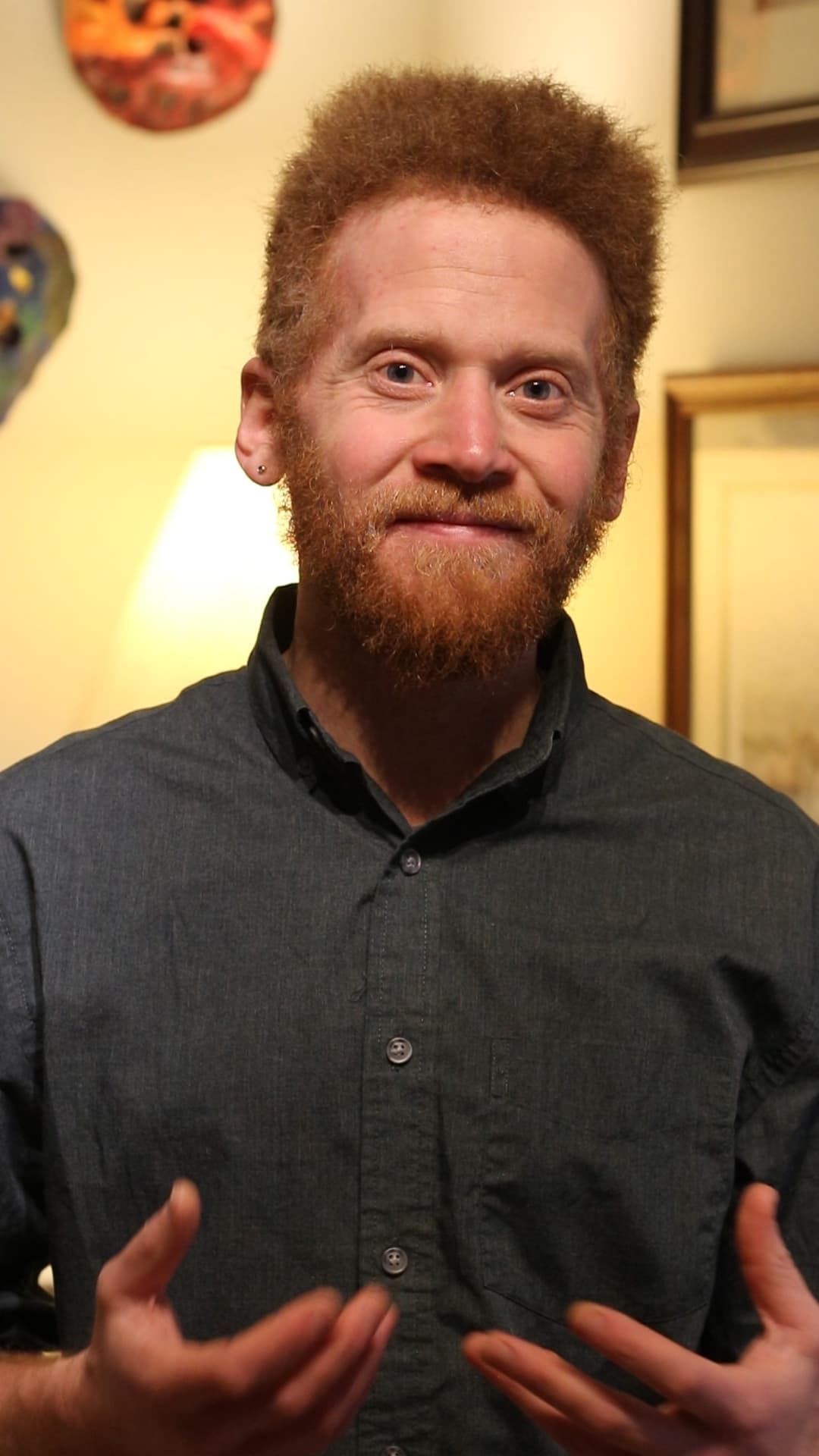
I know what it's like to rebuild your understanding of yourself.
I'm a Registered Therapeutic Counsellor with over 20 years working with children, families, and adults in the Kootenays. I received my own ADHD diagnosis at 38. That experience — of suddenly understanding things about myself that had been confusing for decades — is part of why this work matters to me personally, not just professionally.
I know the particular grief that comes with understanding something too late. And the particular relief that comes with finally understanding it at all.
My practice is grounded in attachment science, polyvagal theory, and somatic approaches. I'm currently completing a Master of Social Work at the University of Calgary. I've been part of the Nelson community for over 13 years — as a practitioner, a parent, and a neighbour.
Simple to get started. Built around what you actually need.
Session format
90 minutes for in-person sessions, 60 minutes virtually. The extra time matters for somatic work — it takes a few minutes to arrive, and the body needs a slower pace than an hour usually allows.
We meet weekly or bi-weekly. Frequency is higher at the start and tapers as things settle.
Location
In person in Nelson, BC. Virtually throughout BC and internationally.
Serving the Kootenays including Castlegar, Trail, Rossland, Kaslo, Slocan, and Salmo.
A limited number of sliding scale spots are available for local families.
Honest filters.
Probably a fit if...
- You've done talk therapy and something deeper still feels stuck
- Your body reacts before your mind has a chance to catch up
- You received an ADHD diagnosis recently and are making sense of your history
- You're a parent who loses it with your kids and hates yourself afterward
- You feel numb, shut down, or disconnected from what you want
- You're ready to slow down and pay attention to what's actually there
Probably not a fit if...
- You're looking for crisis intervention or acute mental health support — there are better resources for that
- You want a structured protocol to follow step by step
- You're not ready to slow down and sit with discomfort
Not sure which side you're on? That's what the free call is for.
The things people wonder before they reach out.
"I've already tried therapy and it didn't really work."
Most people who come to somatic therapy have been in talk therapy before. That's not a strike against you — it means you've already done some of the work. Somatic therapy picks up where talk often reaches its limit: in the body. If you left previous therapy understanding your patterns but still living them, that's exactly the gap this addresses.
"I don't have time for weekly sessions."
Bi-weekly works fine. What matters more than frequency is showing up fully when you do. A slower pace with more integration time between sessions is sometimes the right fit anyway.
"I'm not sure my situation is serious enough."
You don't need a diagnosis or a dramatic history to benefit from this work. If you feel stuck, reactive, or disconnected — that's enough. The bar isn't whether your suffering is bad enough. The bar is whether you're ready to pay attention to what's actually happening.
Less struggle,
more laughter.
The first step is a free 30-minute call. We talk about what's going on, what you're looking for, and whether working together makes sense. No intake forms. No commitment. Just a conversation.
Book Your Free CallNo pressure. No commitment. Just a conversation.
Most people who find their way to somatic therapy have been trying hard for a long time. They're not lacking insight. They're lacking a way to bring that insight somewhere the body can actually use it. If that sounds like you — less struggle, more laughter is possible. It just starts somewhere different than you might expect.